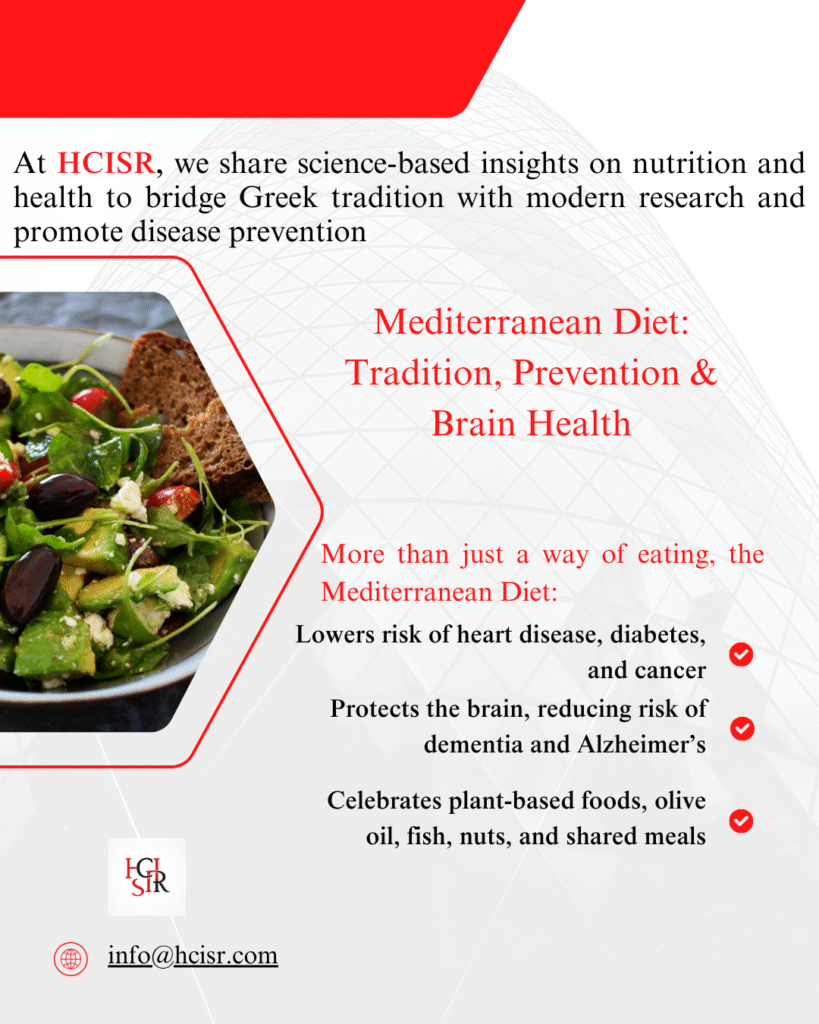
Mediterranean Diet: From Tradition to Longevity, Disease Prevention and Brain Health
The Mediterranean Diet is not just a modern nutrition trend; it is an Intangible Cultural Heritage of Humanity, officially recognized by UNESCO.
For over 50 years, it has resisted the industrialized shift toward high consumption of red meat, saturated fats, and processed foods changes that fueled an epidemic of heart disease, diabetes, and obesity.
In contrast, the traditional eating habits of Crete, southern Italy, Greece, and Spain rich in fresh fruits and vegetables, legumes, whole grains, olive oil, fish, and nuts, have consistently demonstrated benefits for lifelong health and longevity.
The Mediterranean Diet Pyramid was shaped in the 1960s, when these regions showed the world’s lowest rates of chronic disease and highest life expectancy, despite limited medical services.
Core Features
Abundance of plant-based foods: Fruits, vegetables, potatoes, legumes, nuts, and seeds.
Olive oil as the main fat: Replacing butter and margarines with monounsaturated fats.
Moderate intake: Dairy, fish, poultry, and eggs (up to 7 per week).
Limited red meat: Only a few times per month.
Optional wine consumption: Small daily amounts with meals as a source of antioxidants.
Regular physical activity and shared meals, fostering social connection.
Health Benefits
Cardiovascular protection: The PREDIMED trial (Estruch et al., 2013) found up to a 30% reduction in major cardiovascular events.
Diabetes prevention: Low–glycemic index, fiber-rich foods improve glucose control (Salas-Salvadó et al., 2014).
Cancer risk reduction: Polyphenols, tomato lycopene, and vitamin E contribute to lower rates of breast and colorectal cancer (Schwingshackl & Hoffmann, 2014).